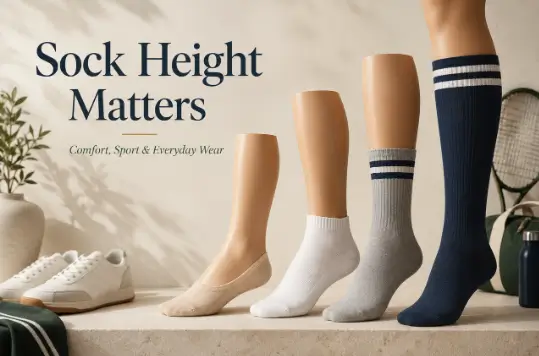
Sock height may seem like a small detail, but it changes how socks feel, look, and perform. The same material can feel completely different in a no-show sock, ankle sock, crew sock, or knee-high sock.
For everyday wear, sports, work, travel, and uniforms, choosing the right sock height can improve comfort and make the outfit look more balanced.
Common Sock Heights and Their Uses
Different sock heights are designed for different shoes, activities, and styling needs.
No-Show Socks
No-show socks are made to sit below the shoe opening. They are popular with sneakers, loafers, and casual shoes when the wearer wants a cleaner, low-profile look.
They work best for light daily wear, warm weather, and casual outfits. However, they need a good heel grip to avoid slipping inside the shoe.
Ankle Socks
Ankle socks sit slightly above the shoe line. They are common for workouts, walking, and everyday sneakers. They offer more coverage than no-show socks while still feeling light.
Crew Socks
Crew socks usually rise to the mid-calf area. They are one of the most versatile sock heights and are often used for sports, school uniforms, casual fashion, and daily wear.
Knee-High Socks
Knee-high socks provide more leg coverage and are often used for specific sports, uniforms, fashion looks, or colder weather.
Sock Height Changes Comfort
Comfort is not only about fabric. Height affects protection, breathability, support, and how the sock works with shoes.
Low Socks Feel Lighter
No-show and ankle socks are better when the wearer wants less fabric around the leg. They are useful in warm weather or with low-cut shoes.
Taller Socks Add Protection
Crew socks and knee-high socks can reduce rubbing from boots, sports shoes, or long-wear footwear. They also provide more coverage in cooler weather.
For a broader breakdown of types of socks, it helps to compare sock height, material, and intended use together instead of choosing by appearance only.
See also: Affordable T2 Filing Solutions for Small and Medium Businesses
Sports and Activity Needs
Different activities place different demands on socks.
Running and Gym Training
Runners and gym users often prefer no-show, ankle, or crew socks depending on shoe type and personal comfort. Breathability and stay-up fit matter here.
Team Sports
Crew socks and knee-high socks are common for many team sports because they provide better coverage and help create a unified look.
Outdoor Activities
For hiking, camping, and outdoor work, taller socks may offer more protection from friction, cold, and rough footwear.
Sock Height and Outfit Style
Socks also affect how an outfit looks.
Clean Casual Looks
No-show socks create a minimal look with sneakers or casual shoes. They are useful when the sock should not be visible.
Streetwear and Sport Looks
Crew socks can become part of the outfit, especially with shorts, sneakers, or athletic wear.
Uniform Styling
Taller socks can make a uniform look more complete, especially in school, sports, or branded apparel settings.
Matching Socks with Other Accessories
Sock choice can also connect with other apparel accessories. For example, a winter retail set might include warm socks and custom beanies in matching colors for a more complete seasonal look.
Color Consistency Helps
Using similar colors across socks, beanies, scarves, or bags can make a product set look more intentional.
Avoid Too Many Patterns
If socks already have a strong pattern, other accessories can stay simple. This keeps the overall look balanced.
Final Thoughts
Sock height affects more than appearance. It changes comfort, protection, activity use, and outfit style.
No-show socks are good for low-profile looks, ankle socks work well for active daily use, crew socks are highly versatile, and knee-high socks offer extra coverage. Choosing the right height helps the sock feel better and look more appropriate for its purpose.