The industrial sector has seen a remarkable transformation over the past few decades, driven by advancements in automation, robotics, and precision engineering. At the heart of these innovations are electric motors, which convert electrical energy into precise mechanical motion. Among the leading solutions in this field, siemens servo motor technology has emerged as a critical enabler for industries seeking accuracy, reliability, and efficiency.
Understanding the Role of Servo Motors
Servo motors are specialized electric motors designed to deliver precise control over angular or linear position, velocity, and acceleration. Unlike standard motors, servo motors operate within closed-loop systems, receiving continuous feedback from sensors to maintain exact positioning. This precision makes them indispensable for applications that demand high accuracy, such as robotics, CNC machines, packaging equipment, and automated assembly lines.
Siemens servo motor solutions are particularly well-regarded for their integration of advanced control electronics, robust design, and scalability. By combining these features, industries can achieve consistent performance, reduce production errors, and increase overall efficiency.
Key Features of Siemens Servo Motors
Siemens servo motors offer several features that make them ideal for modern industrial applications. High precision and rapid response are among the most significant advantages. Feedback systems, such as encoders, provide real-time monitoring of motor position, allowing for immediate corrections and minimizing deviations.
Another essential feature is torque density. Siemens servo motors deliver high torque relative to their size, making them suitable for compact applications without sacrificing performance. Additionally, their low inertia ensures smooth acceleration and deceleration, reducing mechanical stress on connected components.
Energy efficiency is also a key benefit. Advanced electronics and optimized motor designs reduce energy consumption, contributing to lower siemens servo motor operational costs and environmental impact. Their compact and modular design allows easy integration into a wide range of machines and control systems.
Industrial Applications
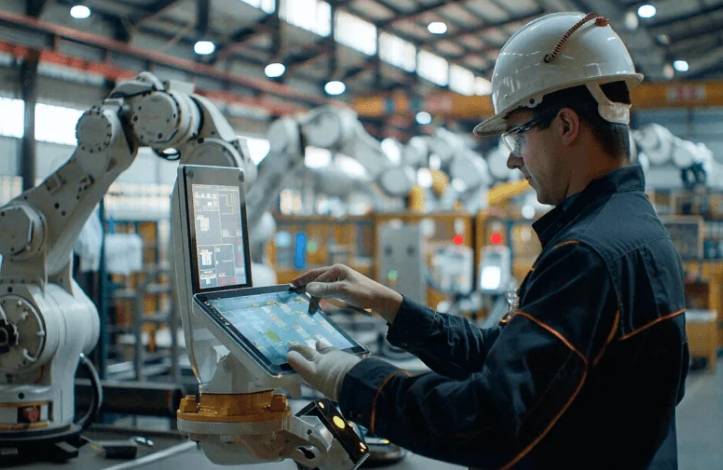
The versatility of siemens servo motor technology makes it a preferred choice across multiple industries. In the manufacturing sector, these motors power robotic arms, CNC machines, and automated assembly lines. Their precision ensures that each product meets strict quality standards while maintaining high throughput.
In the packaging industry, servo motors control filling, labeling, and sealing operations with exacting accuracy, ensuring uniformity and reducing waste. Similarly, in the electronics industry, these motors handle delicate tasks such as microchip assembly, where precision and repeatability are critical.
Automation in the food and beverage industry also benefits from servo technology. Packaging machines, conveyor systems, and automated sorting equipment rely on servo motors to maintain speed and accuracy while adapting to varying product sizes and shapes.
Advantages Over Conventional Motors
Compared to traditional motors, siemens servo motors provide superior control and flexibility. Standard motors operate at a fixed speed and require mechanical systems to achieve position control, which can introduce errors and inefficiencies. In contrast, servo motors offer direct digital control, eliminating the need for complex mechanical feedback systems.
Servo motors also reduce maintenance requirements. Their closed-loop operation minimizes mechanical stress and wear, while precise control reduces the risk of overloading or stalling. This reliability translates into longer equipment lifespan and reduced downtime, which is critical in high-volume industrial environments.
Technological Innovations
Siemens continuously invests in research and development to enhance servo motor technology. Modern siemens servo motor systems feature integrated drives and advanced control software, allowing seamless communication with automation platforms. Features like predictive maintenance, real-time diagnostics, and adaptive control further optimize performance and reliability.
Integration with Industry 4.0 standards is another major innovation. Siemens servo motors can communicate with other devices on a network, enabling centralized monitoring and data analysis. This connectivity allows operators to optimize production, predict maintenance needs, and quickly adjust to changes in demand or workflow.
See also: Innovations in Metal Bending Technology
Energy Efficiency and Sustainability
As sustainability becomes a priority for industries worldwide, energy-efficient motor technology plays a vital role. Siemens servo motors are designed to minimize energy consumption without compromising performance. Advanced electronics optimize power usage during idle periods and variable load conditions, contributing to significant cost savings over time.
Reduced mechanical wear also contributes to sustainability. By operating more smoothly and precisely, servo motors require fewer replacements and generate less waste, supporting environmentally responsible manufacturing practices.
Future Trends in Servo Motor Technology
The future of servo motor technology is closely linked to automation, smart manufacturing, and digitalization. Trends such as AI-driven control, predictive maintenance, and real-time optimization are transforming how industries operate. Siemens servo motors are at the forefront of these changes, offering intelligent systems capable of self-monitoring and adaptive performance.
In addition, the integration of servo motors with collaborative robotics, advanced CNC machinery, and IoT-enabled factory platforms is expected to increase. This will enable more flexible, responsive, and efficient production lines, ultimately improving product quality and reducing operational costs.
Conclusion
Precision, reliability, and efficiency are essential for modern industrial operations, and siemens servo motor technology delivers on all three fronts. By providing accurate position control, rapid response, and energy-efficient operation, these motors have become a cornerstone of automation across manufacturing, packaging, electronics, and more.
Industries that adopt siemens servo motor solutions benefit from reduced maintenance costs, increased productivity, and enhanced sustainability. As technological advancements continue and industrial operations become more connected and automated, the role of servo motors will only grow in importance. For businesses seeking to maintain a competitive edge, integrating siemens servo motors into their production processes represents a strategic investment in both performance and future-ready operations.