Here is a number that fooled me for way too long. $0.80 per thousand followers. I saw it on a panel, compared it to the $1.40 I was paying elsewhere, and felt like an idiot for overspending. So I switched. Two weeks later I had lost almost half of what I bought and spent more topping it up than I ever would have on the “expensive” one.
That price per thousand is the most misleading number in this whole business. It looks like the answer. It is barely half the question.
I have spent years buying social growth for my own projects and for a handful of clients, and comparing panels is the skill that took me longest to learn. Not because it is hard, but because everyone anchors on the sticker price and stops thinking. So let me walk you through how I actually compare a cheap smm panel now, and why the cheapest number on the screen is almost never the cheapest deal in reality.
This is for regular people and small businesses trying to grow on a budget, not agencies moving millions of followers. If that is you, this will save you money.
Why price per thousand lies to you
The price per thousand, sometimes written as price per 1K, is what every panel puts front and center. A thousand Instagram followers for a dollar. Ten thousand TikTok views for fifty cents. It feels concrete and easy to compare.
But that number only tells you what you pay at the moment of purchase. It says nothing about what you actually keep. On social platforms, unfollowing takes one tap, and low-quality accounts get purged in waves. So the followers you buy and the followers you have next month are two different numbers, sometimes wildly different.
Think of it like buying a cheap phone charger. Two dollars feels great until it dies in a month and you buy three more. The five-dollar one that lasts a year was the actual bargain. Same logic here. The sticker price is the start of the math, not the end of it.
The number that actually matters: cost per result that stays
Here is the metric I use now, and it changed everything. Not cost per thousand delivered. Cost per thousand that is still there in two weeks.
Run the numbers with me. Panel A sells at $0.80 per thousand and drops 40 percent. Panel B sells at $1.30 per thousand and drops 8 percent.
- Panel A: you pay $0.80, keep 600 followers. Real cost per thousand kept is about $1.33.
- Panel B: you pay $1.30, keep 920 followers. Real cost per thousand kept is about $1.41.
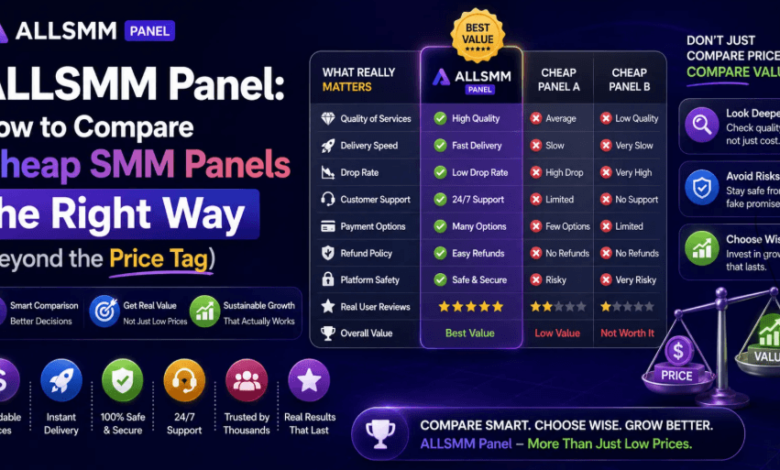
Suddenly the gap between the “cheap” one and the “expensive” one is almost nothing. And that is before you count the time you spend re-ordering, the awkward dip when your count visibly drops, and the risk that Panel A’s crash looks obviously fake to real visitors. Once you fold those in, Panel B usually wins outright.
This is the whole reason I stopped chasing the lowest number. A genuinely good, affordable panel keeps both the price low AND the drop rate low. That combination is the real bargain, and it is rarer than the flood of rock-bottom listings makes it look.
The hidden costs nobody puts on the price page
When you compare two panels, you are never just comparing the two numbers they show you. There is a whole layer of cost hiding underneath. Here is what to factor in.
Drop rate
The single biggest hidden cost. A high drop rate means you are renting followers, not buying them. Always test a small order and check the count at day 7 and day 14 before you trust a panel with anything bigger.
Refill policy
Some panels offer a refill or guarantee window, where they top up drops for free for a set number of days. A slightly pricier panel with a 30-day refill can be cheaper in practice than a bargain panel with no guarantee at all.
Support response time
When an order stalls halfway, support is the only thing standing between you and a wasted payment. A panel that answers in an hour is worth more than a few cents saved on a panel that ghosts you for three days. This cost is invisible right up until you desperately need it.
Minimum deposit
A panel that forces a $50 first deposit is asking you to bet big before you have tested anything. A panel that lets you start with five or ten dollars is quietly cheaper, because it lets you verify quality before committing real money.
How to actually compare two panels, step by step
Forget staring at price lists. Here is the process I run whenever I am weighing one smm panel against another. It takes about two weeks and it settles the question with real data instead of guesses.
- Deposit the minimum on both. Ten or twenty dollars each. You are buying information, not growth, at this stage.
- Order the same thing from each. Same platform, same service, same quantity. You cannot compare apples to oranges, so control the variables.
- Time the start. Note how many minutes until each order begins moving. A quick start matters, because the gap where nothing happens is where you start doubting you got scammed.
- Watch the pacing. Did it arrive naturally over hours, or dump all at once in a suspicious spike? Natural pacing is a quality signal.
- Check retention at day 7 and day 14. This is the moment of truth. The panel with the lower drop is usually the real winner, even if its sticker price was higher.
- Ask support a question on each. Something specific. Judge the speed and whether a human who understands the service actually answered.
Score both on those points and the better panel is obvious. Almost every time, it is not the one with the lowest price per thousand.
See also: Mastering Index Technical Analysis for Consistent Profits in India
Cheap, cheapest, and the trap in between
People use “cheap” and “cheapest” like they mean the same thing. They do not, and the difference is where budgets go to die.
A cheap panel is affordable while still delivering real, lasting results. It keeps prices low by working close to the source and running lean, not by cutting the quality of what it sells. The cheapest panel, meanwhile, hit that rock-bottom number by using the lowest-quality accounts, skipping refills, and offering no real support. One is a smart deal. The other is a false economy dressed up as a win.
So when you compare, do not just sort by price ascending and click the top result. The absolute cheapest option on the internet almost always has the catch buried in the fine print, and that catch usually costs you more than you saved.
A real comparison I ran
Let me make this concrete with an actual test. I run growth for a small handmade candle brand, the kind of niche audience that spots anything fake instantly. I had two panels shortlisted for a batch of Instagram followers.
Panel one listed at $0.75 per thousand, easily the cheaper number. Panel two sat at $1.20. On the price page it was no contest. But I ran my two-week test on both with a small deposit each.
Panel one started fast but dumped the whole order in about ten minutes, one ugly vertical spike, and by day 14 it had shed around 38 percent. Panel two paced the delivery over two days, looked natural the whole way, and dropped only about 7 percent. When I did the real math, panel two came out cheaper per follower that actually stayed, and it did not leave a suspicious spike on the client’s profile. The cheaper sticker price would have cost me more money and a nervous client. I have used the pricier-looking option ever since.
The speed question in a comparison
One thing that trips people up when comparing panels is delivery speed, so let me be clear about it. Faster is good, but instant is a trap.
You do want an order to start quickly, within minutes, because a long silent gap after you pay feels exactly like being scammed. So a quick start is a genuine point in a panel’s favor. When I tested cheap smm panel options against each other, start speed was one of the things that separated the reliable services from the flaky ones.
But you do not want everything delivered in that same minute. Platforms count views and followers over time, and real growth never all lands at once. Ten thousand followers in sixty seconds creates a spike that screams “bought” to anyone glancing at the profile. So the ideal, and what you should reward in a comparison, is a fast start followed by natural pacing. Quick to begin, gradual to finish.
What to look for in the panel you choose
Once you have compared and you are ready to commit, these are the boxes a good panel should tick. Not the lowest price. These.
- A low deposit to start, so you can test before betting big.
- A real range of services, covering the platforms you care about, so you can build a balanced profile instead of just one lonely metric.
- A refill or guarantee window, which tells you the panel actually stands behind what it sells.
- Responsive support that answers in hours and understands the services.
- Low, stable pricing that stays affordable without hiding the cost in high drops.
A panel that ticks those is worth your money even if it is not the absolute cheapest on the screen. That balance of low price and real quality is exactly what a solid smm panel should deliver, and it is what makes the comparison worth doing in the first place.
Frequently asked questions
Why is the cheapest panel not always the best deal?
Because the price per thousand only measures what you pay, not what you keep. A cheap panel with a high drop rate makes you re-order constantly, so the real cost per lasting follower ends up higher than a pricier panel with low drops. Always compare cost per result that stays.
How do I test the drop rate before committing?
Place a small order, ten or twenty dollars, and note the count right after delivery. Check it again at day 7 and day 14. The percentage lost is your drop rate, and it is the single most important number when comparing panels.
What is a normal drop rate?
Some drop is natural on every platform because unfollowing is easy. A modest, single-digit to low double-digit drop over two weeks is reasonable. If you are losing 30 or 40 percent, that is a low-quality source and a sign to walk away.
Does a low price mean the followers are fake?
Not automatically. A lean panel working close to the source can keep prices low while still delivering real, lasting accounts. Fake, disappearing followers come from the rock-bottom cheapest services that cut every corner, not from affordable pricing itself.
Should I care about refill policies?
Yes. A refill or guarantee window means the panel tops up natural drops for free for a set period. It effectively lowers your real cost and signals the panel trusts its own quality, which makes it a strong factor when comparing two options.
How fast should delivery be when comparing panels?
The order should start within minutes, so you know it is working, then arrive gradually over hours or days to look natural. Reward a fast start in your comparison, but treat instant delivery of everything at once as a warning sign, not a feature.