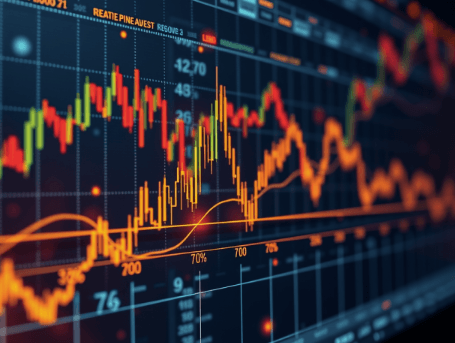
The benchmark index of Indian equities carries within it the pulse of fifty of the most important companies driving the country’s economy. Studying a Nifty 50 Chart with genuine depth — not just glancing at it but truly reading its layers of information — is what separates recreational market watchers from professional-grade analysts. At the same time, the discipline of interpreting SGX Nifty Future movements in the hours before domestic markets open adds a real-world dimension to the analysis, grounding every technical reading in the context of live market sentiment.
What Makes Technical Analysis Genuinely Useful
Sceptics of technical analysis often argue that looking at past prices cannot predict future ones. This critique, while understandable at a surface level, misses a fundamental point: the goal of technical analysis is not to predict the future with certainty — no analytical method can do that. Its goal is to identify situations where the probability of a particular outcome is higher than the alternatives, thereby creating a systematic edge when applied consistently over a large number of trades.
In Indian equity markets, where a large and growing community of technical analysts operates across retail, institutional, and proprietary trading desks, the patterns identified by technical analysis become self-reinforcing to a significant degree. When enough participants react to the same key level or the same chart signal, their collective behaviour creates the very price movement the analysis anticipated. This makes technical analysis not merely descriptive of market behaviour but actually constitutive of it at key junctures.
Fibonacci Retracements as Decision-Making Tools
Among the more mathematically elegant tools in the technical analyst’s toolkit is the Fibonacci retracement framework. Based on the Fibonacci number sequence, these retracement levels — most commonly the 23.6%, 38.2%, 50%, and 61.8% levels — represent proportional pullback zones within a prior trend leg. They are widely used by traders to identify potential support levels during an uptrend or resistance levels during a downtrend.
The 61.8% retracement level — often called the golden ratio — is considered the most significant. When the benchmark index pulls back to this level after a strong upward move and then stabilises, it often represents a high-probability buying opportunity for traders with a medium-term horizon. Combining Fibonacci levels with other technical tools — such as prior horizontal support, a rising trend line, or a bullish candlestick pattern — creates confluence that substantially improves the odds of a successful trade.
Volume Profile and Identifying High-Value Trading Zones
Volume profile is a more advanced analytical tool that maps the distribution of trading volume across different price levels rather than across time. The result is a visual representation showing where the most and least trading activity has occurred over a defined historical period. The price level with the highest concentration of volume — known as the Point of Control — acts as a powerful magnet for price and is one of the most reliable support or resistance zones in the market.
Areas of low volume, known as volume voids, tend to be traversed quickly when price enters them, as there is little historical transaction support to slow the move. This characteristic makes volume profile an especially useful tool for estimating the speed and extent of price moves once a key level is breached. Traders who incorporate volume profile into their benchmark index analysis often find it to be one of the most actionable and precise tools in their entire repertoire.
See also: The Power of Prenatal Vitamins: Supporting a Healthy Start for Your Baby
The Importance of Higher Highs and Higher Lows
One of the simplest yet most powerful concepts in technical analysis is the structure of price highs and lows. An uptrend is technically defined as a series of successively higher highs and higher lows. A downtrend is the inverse — a series of lower highs and lower lows. As long as this structure remains intact, the prevailing trend is considered healthy and in force.
When the structure breaks — for example, when the market in an uptrend fails to make a new high and then violates the most recent swing low — it is an early warning that the trend may be changing. This structural break often precedes a confirmed reversal by several sessions, allowing alert traders to reduce exposure or initiate hedges before the broader market recognises the shift. Monitoring trend structure on the benchmark index chart is one of the simplest and most effective forms of risk management available.
Applying Average True Range for Position Sizing
The Average True Range, which measures the average magnitude of daily price moves over a rolling period, is an indispensable tool for calibrating position size to current market volatility. When the Average True Range is high, markets are moving aggressively in both directions, and a wider stop-loss is needed to avoid being shaken out by normal volatility. When it is low, tighter stops are appropriate, and smaller position sizes reduce the risk of being caught in a sudden volatility expansion.
By always expressing stop-loss distances in terms of Average True Range multiples rather than arbitrary point values, traders ensure that their risk is consistent across different market environments. A one-Average-True-Range stop in a calm market and a one-Average-True-Range stop in a volatile market represent the same statistical probability of being hit, making this approach far more robust than setting fixed-point stops without regard to prevailing volatility conditions.
Developing a Trading Edge Through Consistent Back-Testing
No trading approach should be deployed with real capital before it has been tested against historical data. Back-testing involves applying a specific set of trading rules to historical price data and measuring the resulting performance metrics — win rate, average profit per trade, maximum drawdown, and overall return. This process reveals the true statistical character of a strategy and allows traders to form realistic expectations about its future performance.
Indian traders have access to high-quality historical data for the benchmark index and its derivatives going back well over a decade. This data archive is an invaluable resource for developing and refining technical strategies. The traders who commit to the rigorous discipline of back-testing — and who have the intellectual honesty to abandon strategies that do not hold up under scrutiny — consistently outperform those who rely on intuition and anecdote alone. In markets, as in most competitive endeavours, the prepared mind always prevails over time.