Most people spend months picking out the perfect pool shape, tile color, and heating system, and then treat the ground around it as an afterthought. That is a mistake, and honestly, it is the single most common one I see in backyard renovations. The area surrounding your pool is where people actually sit, eat, talk, and relax, so if it feels like an unfinished construction site, the pool itself will never live up to its potential. Good pool landscaping is what turns a plain rectangle of water into something that feels like a private resort. This guide breaks down how to actually get there, step by step, without overcomplicating things.
Why the Landscaping Matters Just as Much as the Pool
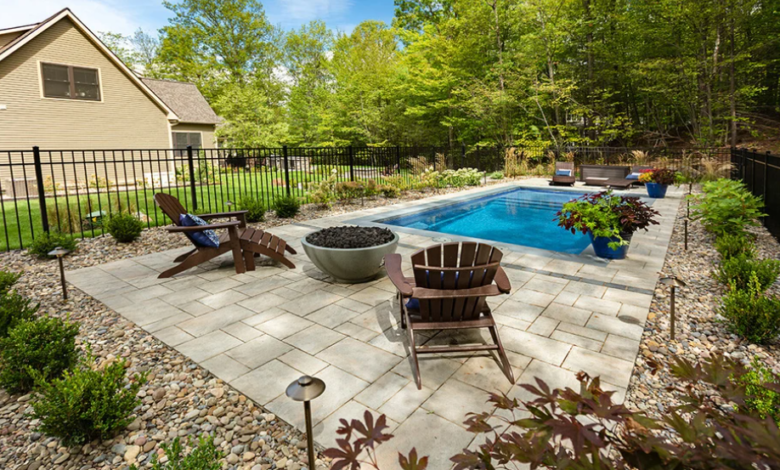
Here is a scenario worth picturing for a second. Two identical pools, same size, same tile, same water. One sits surrounded by patchy grass, a chain link fence, and a couple of plastic chairs dragged out from the garage. The other is framed by layered plants, warm stone paths, and lighting that glows once the sun goes down. Which one looks like it belongs on a postcard? The landscaping is doing almost all of the emotional work in that comparison, and that is the part a lot of homeowners underestimate until they see it done right. Beyond looks, good landscaping also solves real problems, things like keeping leaves and dirt from blowing straight into your filter, controlling runoff after a heavy rain, and giving guests somewhere comfortable to actually sit that is not directly on hot concrete.
Start With How People Will Actually Move Through the Space
Before you buy a single plant, walk your yard and think like a guest. Where does someone step out of the house and head toward the water? Where do towels end up? Where would you want a quiet spot away from the splashing if you just wanted to read for twenty minutes? These questions matter more than they sound like they should. A pool area generally works best when it is broken into a few loose zones: a lounging zone with chairs and shade, a dining or bar setup for entertaining, and maybe a smaller nook tucked away for anyone who wants a break from the noise. Pathways need to be wide enough that wet feet and pool floats do not turn into a tripping hazard, and honestly, most people undersize these on the first draft.
See also: What Makes a Good Electrician Worth Hiring? A Real, Honest Look from a Homeowner’s Perspective
Picking Plants That Will Not Fight You Later
Not every plant deserves a spot near a pool, and this is where a lot of otherwise good designs fall apart. Trees that drop leaves constantly, shrubs that ooze sap, or flowering plants that pull in bees all sound fine on paper until you are fishing debris out of the skimmer every single morning. Ornamental grasses, boxwood, palms, and drought tolerant succulents tend to be the safer bet, since they hold up well and do not create constant cleanup. Mixing heights helps too. Taller shrubs along a fence line, lower groundcover near the walking paths, and maybe a few potted accents near the seating area will make the whole space feel layered instead of flat. Shade is worth thinking through as well, since too much of it can cool your water more than you would like, while too little leaves the deck unbearable by mid afternoon.
The Hardscaping Is What Holds It All Together
Plants soften a space, but stone, pavers, and decking are what actually give it structure. Natural stone and interlocking pavers are popular for a reason. They handle wet feet well, they last, and they tend to match almost any home style without looking out of place. If your yard slopes at all, a retaining wall can double as a planting bed or even built in seating, which saves space while solving a grading problem at the same time. Lighting tucked into steps, walkways, or garden beds does more for a pool area than people expect, both for safety once it gets dark and for that resort feeling everyone is chasing. The trick is designing the hardscaping and the plants together from the start, rather than picking one and bolting the other on afterward.
Where 3D Pool Design Actually Changes Things
Here is something that trips up almost everyone doing this for the first time. It is genuinely hard to picture how a finished backyard will look based on a sketch or a verbal description. You end up making decisions somewhat blind and hoping it works out. This is exactly why 3D pool design has become such a useful step in the planning process. It lets you actually walk through a rendering of your future backyard, seeing where the plants sit, what the patio material looks like, how the lighting hits at night, before a single shovel goes into the ground. Changing a plant location or swapping a paver color on a screen costs nothing. Changing it after the concrete has cured costs a lot. If you are putting real money into a backyard overhaul, asking for a 3D design upfront is one of the smarter moves you can make.
Keeping It Looking Good Years Down the Road
A pool landscape needs to be designed with upkeep in mind, not just how it looks on install day. Mixing in more hardscape and less lawn near the pool edge cuts down on grass clippings ending up in the water, which sounds minor until you are the one cleaning the skimmer basket every week. Drainage around your planting beds matters too, since without it, mulch and loose stone tend to wash straight into the pool after a storm. Think seasonally as well. Plants that look great in July but leave a mess by October will cost you more time than they are worth. And honestly, working with a team that handles both the pool build and the landscaping tends to save a lot of headaches, since drainage, lighting, and planting all need to work as one system rather than three separate projects bolted together.
Bringing It All Together
A great pool area is never just about the water. It is the layout, the plants, the stone, and increasingly, the ability to see it all mapped out in 3D before construction even begins. Get those pieces working together and the backyard stops feeling like a yard with a pool in it, and starts feeling like a retreat you built on purpose. Whether you are starting from scratch or reworking an existing space, the planning stage is where the real value gets created. Put the effort in there, and the rest tends to fall into place.