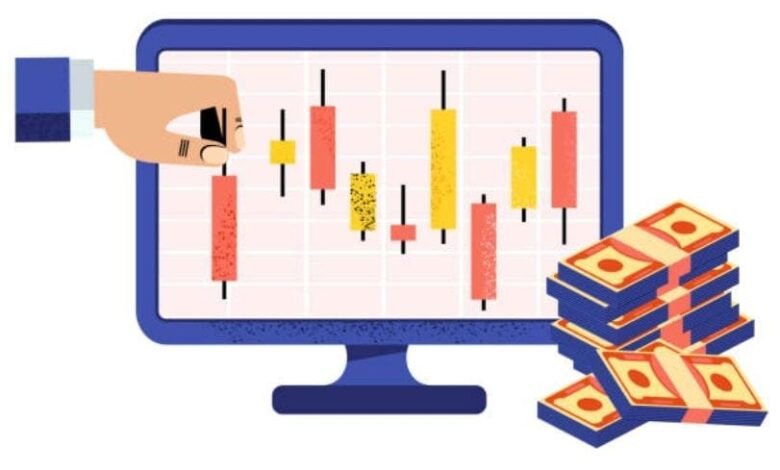
The contemporary financial landscape, perpetually in flux, has ushered in a new era of investment opportunities, particularly through accessible platforms such as Stockity login. As digital trading democratizes market access, a pivotal question frequently surfaces, particularly for neophyte participants: what exactly constitutes the indispensable capital requirements for engaging with binary options, and how does one manage this initial outlay judiciously? It’s a deceptively simple query that belies the critical psychological and fiscal discipline required to thrive in this high-velocity environment.
The Allure of Minimal Entry
One of the defining characteristics attracting a significant cohort to platforms like Stockity is the remarkably low barrier to entry. Unlike traditional equity or derivatives markets demanding substantial minimum balances, many binary platforms operate on an ethos of fiscal inclusion. While the exact minimum deposit for Stockity is platform-specific and can fluctuate—it’s often designed to be surprisingly modest, frequently beginning at a figure that’s highly accessible to a broad spectrum of users.
This low initial threshold acts as a double-edged sword. On one hand, it permits curious individuals to dip their toes into the market’s currents without risking a precipitous financial drain. On the other, it can cultivate a hazardous illusion of diminished risk. An ultra-low minimum deposit might encourage a cavalier approach to capital allocation, fostering a predisposition to reckless over-trading or neglecting the fundamental tenets of risk management. The genuine capital requirement, therefore, isn’t just the minimum deposit stipulated by the platform, but rather the sum a trader is prepared to allocate—and potentially forfeit—without causing a significant disturbance to their overall financial equilibrium.
Capital and the Cognitive Trap
The discussion must transcend mere numerical values and delve into the more nuanced aspects of capital management. The true litmus test for any serious Stockity participant is not the size of their first deposit but the unwavering rigor of their position sizing. Seasoned veterans of volatile markets understand that the preservation of capital is paramount to its eventual accretion. A popular, though conventional, piece of wisdom suggests that a trader should never commit more than 1–2% of their total trading capital to a solitary transaction. This seemingly conservative constraint is, in fact, an anchor against the emotional tempests that inevitably accompany a losing streak.
To truly master the “capital conundrum” on a platform like Stockity, one must first embrace the stark reality of the binary options structure. The fixed, all-or-nothing payout profile means that the probability of prolonged drawdown is a persistent existential threat. Your initial capital, irrespective of its magnitude, must be viewed not as expendable lottery tickets, but as the foundational resource for a long-term, calculated campaign.
The Unconventional Truth: Leveraging the Demo Account
An unconventional but immensely valuable perspective on capital management involves a phase of simulated mastery. Stockity, like many contemporary platforms, furnishes a free demo account, often pre-loaded with virtual funds. While this may not involve real capital, its disciplined use represents the most critical phase of genuine capital preservation. Why squander actual monetary units while grappling with the platform’s mechanical quirks, the nuances of asset movements, or the psychological pressures of execution?
The demo account is not a mere playground; it is a laboratory for replicable profitability. A trader should not transition to a live account until they have demonstrably achieved sustained, documented success in the simulated environment. This systematic approach transforms the capital requirement from a deposit figure into a prerequisite for competence. By rigorously backtesting strategies and internalizing risk limits on the demo platform, traders essentially ensure that their real capital deployment is an execution of a proven plan, rather than a speculative, costly experiment.
The effective management of capital on Stockity login is a testament to discipline, not size. It mandates a steadfast commitment to the 1-2% rule, a forensic analysis of one’s trading journal, and the psychological fortitude to step away when the market exhibits unpredictable capriciousness. The true capital requirement is the investment you make in your own education and emotional control, ensuring that your financial capital serves as a tool for growth, not a casualty of inexperience.
Embark on your journey of disciplined capital growth today. Explore the Stockity platform’s features and begin refining your risk management strategy on their practice environment.