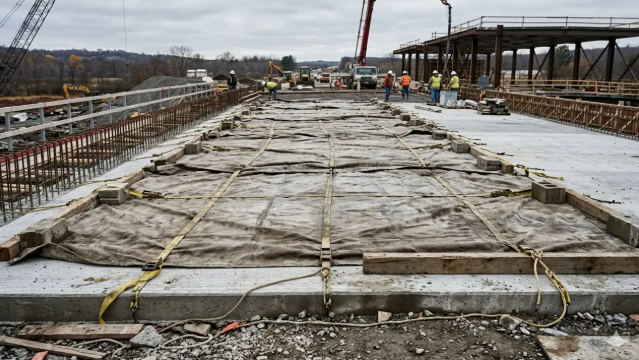
Contractors working through colder months face a genuine technical challenge: fresh concrete needs specific temperature conditions to cure properly, and a cement blanket has become the standard solution for maintaining those conditions when ambient weather won’t cooperate naturally.
The Science Behind Why This Matters
Concrete curing involves a chemical reaction called hydration, which generates heat naturally but also requires adequate ambient warmth to proceed at the rate necessary for proper strength development. When temperatures drop too low, this reaction slows significantly, and in freezing conditions, ice crystal formation within the concrete can cause permanent structural damage.
See also: How to Extend the Life of Your Heating and Cooling Equipment
How Insulating Coverage Solves This Problem
By trapping the heat concrete generates during hydration, along with providing a barrier against cold ambient air, a cement blanket maintains a more favorable curing temperature at the concrete’s surface, allowing the strength-building process to continue even when outdoor conditions would otherwise be problematic.
What Goes Into Blanket Construction
Quality cement blankets typically feature an insulating core, often a fiberglass or similar material, encased in a durable, weather-resistant outer covering designed to withstand direct job site exposure, including contact with the concrete surface itself and general handling during installation and removal.
Selecting Appropriate Insulation Levels
Different projects call for different insulation performance depending on expected temperature conditions, making it worth understanding a specific blanket’s rated insulation value relative to the coldest conditions the project is likely to encounter during the curing period.
Contractors researching specifications and selection guidance can find detailed information through this resource on cement blanket products for cold-weather concrete protection.
Proper Installation Practices
Simply draping a blanket over fresh concrete isn’t sufficient on its own. Proper installation involves ensuring adequate coverage across the entire pour, appropriate overlap at seams, and sometimes additional securing methods to prevent wind or job site activity from disturbing the protective coverage during the critical early curing period.
Monitoring Concrete Temperature During Curing
Many contractors pair blanket protection with temperature monitoring, using sensors to confirm the concrete surface is actually maintaining adequate temperature throughout the curing process, rather than simply assuming the blanket alone guarantees sufficient protection without verification.
Final Thoughts
A cement blanket addresses a genuine, well-understood construction challenge, enabling reliable cold-weather concrete work by maintaining the temperature conditions necessary for proper curing and long-term structural integrity.
Frequently Asked Questions
Does blanket insulation value matter more in extremely cold climates?
Yes, projects in consistently colder regions generally benefit from higher-rated insulation to maintain adequate curing temperatures throughout the process.
Is temperature monitoring necessary alongside blanket protection?
Many contractors find this valuable for verification, though specific requirements depend on project specifications and local building code requirements.
How long should blankets typically remain on fresh concrete?
This varies by project and temperature conditions, generally following the timeline needed for the concrete to reach adequate strength before protection is removed.