Brake problems rarely develop without warning. Changes in braking response, unusual noises, excessive heat and uneven component wear can all indicate that part of a heavy vehicle’s braking system needs attention.
Regular inspections are just as important as fitting suitable truck brake parts when replacement becomes necessary. Brakes operate as a connected system, so replacing a worn pad, lining or drum without identifying why it deteriorated may allow the same problem to return.
Recognising early warning signs gives drivers and maintenance teams an opportunity to investigate faults before they cause secondary damage, unexpected downtime or a more extensive repair.
Know How the Vehicle Normally Brakes
Drivers are often the first people to notice developing brake problems because they know how the vehicle responds under normal operating conditions.
Warning signs that should be reported include:
- Longer stopping distances under familiar conditions
- Pulling to one side during braking
- Shuddering or vibration
- A change in pedal feel
- Squealing, scraping or grinding noises
- Repeated low-air warnings
- Brake or ABS warning lights
- A burning smell or unusual heat from a wheel end
These symptoms do not identify the cause on their own. Pulling may result from uneven braking force, contamination, adjustment problems or a restricted component. Vibration may be associated with uneven disc or drum surfaces, but related wheel-end components may also need inspection.
Grinding requires particular attention because it can indicate that friction material has worn far enough for metal components to contact the disc or drum. Continuing to operate the vehicle may turn a standard friction-material replacement into a repair involving discs, drums or other wheel-end components.
The National Heavy Vehicle Regulator recommends checking braking systems during pre-start inspections and repairing identified defects before travelling. For air-braked vehicles, its guidance includes applying the brakes with the engine off and listening for air leaks or abnormal sounds.
Inspect More Than Pads and Linings
Brake pads and shoes naturally wear because braking converts the vehicle’s movement into heat through friction. However, effective brake inspection should cover the complete system rather than focusing only on the amount of friction material remaining.
Components that may need inspection include:
- Brake pads, shoes and linings
- Discs and drums
- Calipers and mounting hardware
- Slack adjusters and mechanical linkages
- Brake chambers
- Air valves, reservoirs and hoses
- Electrical connections and ABS components
Brake linings should be checked against the vehicle or component manufacturer’s service limits. Discs may develop scoring, cracking, heat damage or uneven surfaces. Brake drums need to be measured because their internal diameter increases as the braking surface wears.
The National Heavy Vehicle Inspection Manual provides nationally consistent criteria for inspecting heavy-vehicle brakes. Its brake section covers mechanical components, adjustment, hoses, air reservoirs, leakage and braking performance.
Measurements and service limits should always follow the relevant manufacturer’s specifications rather than relying only on visual appearance.
Pay Attention to Uneven Wear
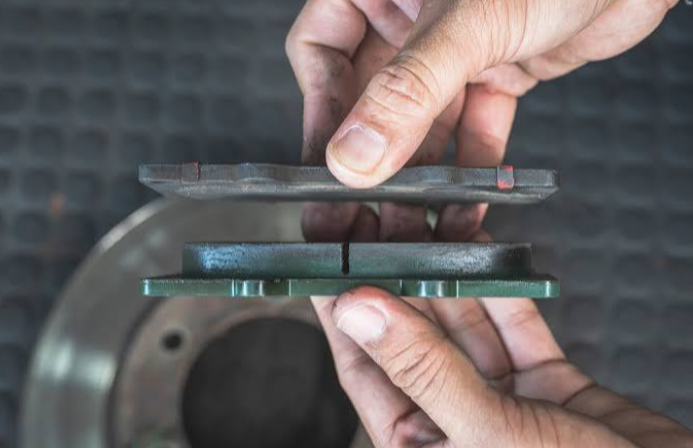
Friction material should be inspected for its wear pattern as well as its remaining thickness.
If one pad or lining has worn considerably faster than another on the same axle, technicians should investigate why. Possible causes may include restricted caliper movement, incorrect adjustment, damaged hardware, contamination or a brake that is not releasing correctly.
Replacing only the worn material may restore braking temporarily but leave the underlying fault unresolved. The replacement component can then develop the same wear pattern.
Repeated abnormal wear at the same wheel position should also be reviewed through the vehicle’s maintenance records. A recurring pattern may indicate an ongoing mechanical, adjustment or air-delivery problem rather than an issue with the friction material itself.
Monitor Unusual Wheel-End Heat
Braking produces heat, so warm wheel ends after operation are not automatically a sign of failure. Significant differences between wheels operating under similar conditions may still provide useful diagnostic information.
A wheel end that is substantially hotter than the others could indicate a dragging brake, restricted component or incorrect adjustment. A noticeably cooler wheel may suggest that the brake is contributing less braking force than the others.
Temperature differences are clues rather than proof of a specific fault. Bearings, tyres, road conditions, vehicle loading and recent brake use can also affect temperatures.
Smoke, a strong burning smell or extreme heat requires prompt attention. The vehicle should not continue operating until the cause has been assessed by an appropriately qualified technician.
Understand How Duty Cycle Affects Brake Wear
Brake life cannot be predicted accurately by kilometres alone. The vehicle’s load, route and operating conditions determine how much work the braking system performs.
A metropolitan delivery truck may travel fewer kilometres than a long-distance vehicle but complete many more braking cycles. Heavy loads, stop-start traffic and repeated operation on steep roads can also increase brake temperatures and accelerate wear.
Long downhill sections present a particular risk because repeated use of the service brakes can produce substantial heat. NHVR guidance for steep descents emphasises selecting an appropriate low gear and using available auxiliary braking systems correctly so the vehicle does not rely excessively on its primary brakes.
Maintenance intervals should reflect the vehicle’s actual duty cycle. A schedule designed for line-haul operation may not be suitable for a truck working in urban delivery, construction or steep regional conditions.
Recording wear by route, axle and wheel position can help operators identify where service intervals need to be adjusted.
Check Air-Brake System Performance
A vehicle may have adequate friction material but still experience poor braking if the air system cannot apply the brakes correctly.
Inspections should check for damaged hoses, loose connections, air leakage, valve problems and the condition of reservoirs and brake chambers. Hoses should not be kinked, cracked, affected by heat or showing visible leakage, swelling or bulging.
Repeated low-air warnings, slow pressure build-up or audible leakage should never be dismissed as normal operation. Air loss may reduce available braking performance and indicate a fault that needs immediate investigation.
Adjustment mechanisms also need attention. Excessive brake travel or incorrect adjustment can prevent the brakes from applying as intended, even when pads, shoes and drums remain within their service limits.
Do Not Ignore Dashboard Warnings
A brake or ABS warning light does not always mean that the friction material is worn, but it does indicate that the system has identified a condition requiring attention.
Depending on the vehicle, the issue may involve a wheel-speed sensor, electrical connection, air pressure, control unit or another part of the braking system.
Drivers should record when the warning appeared and whether it was accompanied by changes in braking response. Turning the vehicle off and restarting it may cause a warning to disappear temporarily, but this does not confirm that the underlying issue has been resolved.
Diagnostic information should be checked using equipment and procedures appropriate to the vehicle.
Know When the Vehicle Needs Immediate Inspection
Some brake symptoms should result in the vehicle being removed from service rather than waiting for its next scheduled maintenance appointment.
Prompt inspection is required when there is:
- A significant reduction in braking performance
- Metal-on-metal grinding
- Smoke or severe heat from a wheel end
- A major air leak or repeated pressure loss
- Severe vibration or pulling
- A sudden change in pedal response
- An unresolved brake-system warning
Continuing to operate with a serious fault can damage discs, drums, hubs, bearings and tyres. More importantly, it may affect the driver’s ability to slow or stop the vehicle predictably.
NHVR inspection criteria are intended to help operators identify wear, damage and changes that may affect compliance or safe operation. Brake and wheel defects continue to be highlighted by the regulator as an important heavy-vehicle maintenance concern.
Use Maintenance Records to Find Developing Patterns
A single inspection shows the condition of the vehicle at one point in time. Maintenance records reveal how quickly components are wearing and whether the same faults continue to occur.
Useful records include:
- Friction-material measurements
- Disc and drum measurements
- Wheel-position information
- Reported driver symptoms
- Air-leak and adjustment findings
- Repairs and replacement components
- Vehicle load and route information
Comparing this information over time can identify abnormal wear before it causes an in-service failure. It also helps workshops distinguish between ordinary component wear and a recurring system fault.
After repairs, the braking system should be checked to confirm that the original symptom has been resolved. Depending on the work completed, this may involve adjustment checks, air-leak testing, wheel-end inspection, diagnostic testing or an appropriate brake performance test.
Early Detection Reduces Avoidable Repairs
Brake wear may first appear as noise, heat, vibration, uneven friction-material wear or a change in the way the vehicle responds. Reporting and investigating these signs early gives maintenance teams more opportunity to correct the cause before damage spreads to other components.
Reliable brake maintenance combines driver observations, scheduled inspections, accurate measurements and timely replacement of worn truck brake parts. It should also reflect the vehicle’s route, load and operating environment rather than relying only on kilometres travelled.
Finding the cause of abnormal wear is more effective than repeatedly replacing damaged components. For heavy-vehicle operators, early detection supports safer braking, more predictable maintenance and less disruption from preventable workshop repairs.