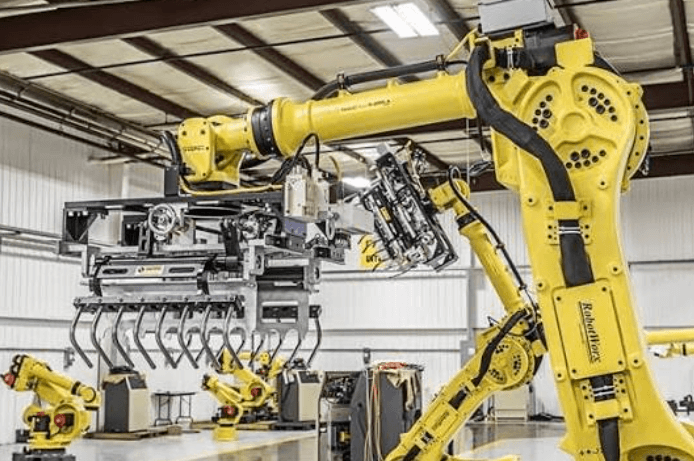
Modern manufacturing has changed dramatically over the past few decades. Machines now handle tasks that once required dozens of skilled workers, and they do it faster, safer, and with fewer errors. At the heart of this transformation are robot gripper systems: the mechanical “hands” that allow automated machines to pick, place, hold, and manipulate objects with remarkable accuracy.
Whether you’re assembling electronics, packaging food, or producing medical devices, how a machine grips an object determines everything: speed, accuracy, product safety, and overall output quality. Understanding how these systems work and why they matter helps manufacturers make smarter decisions about automation investments.
Why the Way a Machine Holds an Object Changes Everything in Production
It’s easy to overlook the gripper. People focus on robotic arms, sensors, and software, but none of that matters if the machine can’t hold the part correctly. A gripper that applies too much force can crush a component. Too little, and the part slips. The entire production line depends on getting this balance right.
Robotic factory automation has made enormous strides, but the gripping interface remains one of the most technically demanding aspects of any automated system.
1. Force Control and Object Integrity
Grippers must apply precise, consistent force, enough to secure the object without causing damage. This is critical for fragile items like glass, ceramics, or food products.
2. Repeatability Across Thousands of Cycles
A gripper that works perfectly on the first cycle must work identically on the ten-thousandth. Repeatability is what separates industrial-grade grippers from consumer robotics.
3. Speed Without Sacrificing Accuracy
Modern production lines move fast. Grippers must open, close, and reposition in fractions of a second while maintaining exact placement, a balance that requires precise engineering.
4. Adaptability to Different Part Geometries
Not every product is the same shape. Gripper systems must often handle multiple part types within a single production run, requiring flexible jaw designs or adaptive mechanisms.
The Core Technologies Behind Modern Gripping Systems
A gripping system is more than just two metal fingers. Today’s industrial grippers incorporate sensors, actuators, and intelligent controls that make real-time adjustments based on feedback.
Different applications call for different approaches, and manufacturers today have a wide range of technologies to choose from depending on their specific needs.
1. Pneumatic Grippers
Powered by compressed air, pneumatic grippers are fast, reliable, and widely used. They’re ideal for high-speed applications where cycle time is critical.
2. Electric Grippers
Electric grippers offer programmable force and stroke control. They consume less energy and allow precise adjustment without changing physical hardware.
3. Vacuum and Suction-Based Grippers
Ideal for flat or smooth surfaces, vacuum grippers use suction cups to handle items like glass panels, sheet metal, or packaged food without any mechanical clamping.
4. Collaborative and Soft Grippers
Designed for human-robot collaboration, soft grippers use flexible materials to gently handle irregular or delicate objects, from fresh produce to consumer electronics.
How Gripping Technology Is Redefining Manufacturing Standards
Gripping technology has evolved from simple open-and-close mechanisms to intelligent, sensor-integrated systems capable of responding to real-world variation. This shift has had a measurable impact on production quality and efficiency.
Manufacturers who invest in advanced gripping solutions consistently report fewer defects, lower cycle times, and reduced downtime caused by part mishandling.
1. Real-Time Sensor Feedback
Modern grippers incorporate force and torque sensors that detect slippage or misalignment instantly, allowing the system to correct before an error becomes a defect.
2. Integration With Vision Systems
When paired with machine vision cameras, grippers can locate, orient, and pick randomly placed parts, a capability known as bin picking that dramatically reduces manual handling.
3. Reduced Tooling Changeover Time
Quick-change gripper systems allow production lines to switch between part types in minutes rather than hours, improving flexibility without sacrificing precision.
4. Predictive Maintenance Through Data
Smart grippers collect operational data over time. Manufacturers can use this information to schedule maintenance before failures happen, keeping lines running longer.
Selecting the Right Robotic Arm Accessories for Your Application
Choosing the right robotic arm accessories, including grippers, tool changers, force-torque sensors, and wrist adapters, is a decision that directly affects your production outcomes. There’s no universal solution; the right choice depends on the parts you handle, your production speed, and your quality requirements.
A systematic approach to selection avoids costly mismatches between the gripper and the application.
1. Understanding Payload and Reach Requirements
Every gripper has weight and distance limits. Matching these specifications to your application prevents mechanical stress and ensures long service life.
2. Considering the Work Environment
Harsh environments with dust, moisture, or extreme temperatures require grippers built from appropriate materials with suitable sealing standards.
3. Factoring in Cycle Time Demands
A gripper that takes too long to actuate will become the bottleneck in your line. Always evaluate actuation speed relative to your target cycle time.
4. Evaluating Long-Term Maintenance Needs
Some gripper types require more frequent servicing than others. Factoring in maintenance costs and intervals gives a more accurate picture of the total cost of ownership.
SCHUNK: Engineering Precision for Real-World Manufacturing Challenges
SCHUNK is a company built around exactly these questions. Their specialists bring deep knowledge across toolholding, workholding, and automation technology. Rather than offering isolated components, SCHUNK develops complete, intelligent solutions for robot systems and a wide variety of production and automation processes, all from a single source, tailored to individual customer requirements.
One example of their product range is the angular gripper, designed for applications where standard parallel grippers can’t access the part geometry. These components reflect the kind of precision engineering that makes the difference between a good production process and an exceptional one.
The Measurable Impact of Automation on Manufacturing Output
Investing in advanced robotic factory automation and precision gripping technology isn’t just about keeping up with industry trends; it produces real, quantifiable results that affect the bottom line.
Across industries, automated gripping solutions have consistently demonstrated their value through improved throughput, quality, and worker safety.
1. Higher Throughput With Consistent Quality
Automated grippers operate at consistent speed and force, eliminating the variability introduced by human fatigue. Output increases while defect rates fall.
2. Improved Workplace Safety
Removing human hands from dangerous gripping and handling tasks reduces injuries and improves compliance with safety regulations, a benefit that goes beyond productivity.
3. Scalability Without Proportional Cost Increases
Once an automated gripping system is in place, scaling production often requires less additional investment compared to adding manual labor to achieve the same output.
See also: Turning Customer Conversations into Strategic Business Intelligence
Conclusion
Precision and efficiency in manufacturing don’t happen by accident; they’re the result of deliberate engineering decisions at every stage of the production process. Robot gripper systems play a foundational role in that process, determining how reliably and accurately automated lines can handle the products they produce. From selecting the right gripping technology for a specific application to integrating smart sensors and vision systems, manufacturers who invest thoughtfully in gripping solutions gain a lasting competitive advantage. As manufacturing continues to evolve toward greater automation and intelligence, the ability to hold, move, and place objects with absolute precision will only grow more important, making gripper systems not just a component but a strategic asset.