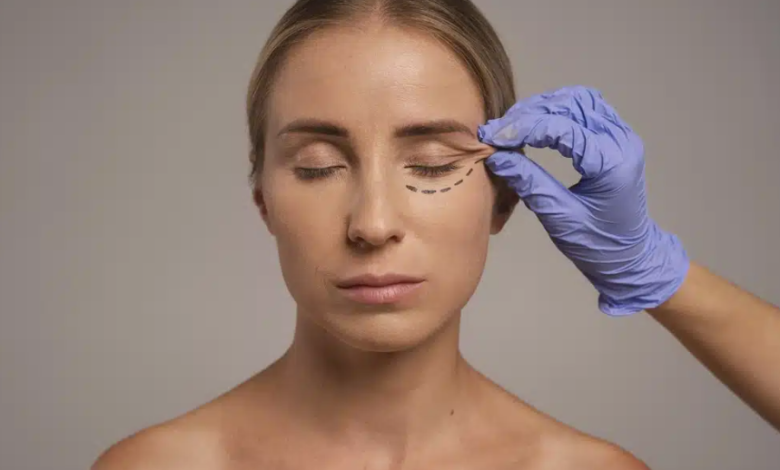
Cosmetic and reconstructive surgery decisions are personal and deserve more than a quick comparison of photographs. For people considering eyelid surgery, a useful first step is understanding the clinical assessment, possible alternatives and recovery commitments. Individual anatomy and health history can affect whether a procedure is appropriate. This guide focuses on upper eyelid skin, lower eyelid fullness and eye comfort, without assuming that any operation will produce a particular appearance or result.
Begin with a specific concern, not a promised result
A consultation is most productive when the patient can describe the concern in everyday language. The discussion might involve upper eyelid skin, lower eyelid fullness and eye comfort. A clinician can then explain which features may be relevant, which findings require examination and whether non-surgical management or no intervention is a reasonable option. Photographs and online descriptions can help frame questions, but they cannot establish suitability or predict an individual’s outcome.
People comparing information about eyelid surgery Malaysia can use procedure-specific resources to prepare questions. A website description is not a substitute for an examination, independent medical advice or a clear discussion of risks.
See also: Mastering Index Technical Analysis for Consistent Profits in India
Clinical assessment and personal health history
Before recommending any elective procedure, a qualified clinician should review the patient’s relevant medical conditions, current medicines, previous operations and healing history. The assessment may also consider eye health, dry-eye symptoms and the position of the eyelids. Smoking, some medications and certain health conditions can affect surgical planning and recovery. Patients should disclose supplements and previous complications rather than assuming those details are unimportant.
An appropriate examination may identify factors that cannot be judged from a photograph. The surgeon should explain the proposed technique in terms the patient understands and be willing to discuss uncertainty. Patients should ask about the practitioner’s qualifications, registration, facility arrangements and follow-up care. These checks are especially important when comparing providers across locations or travelling for treatment.
Understanding the procedure and its alternatives
The label used in an advertisement may cover several techniques. In this area, the relevant choices often depend on upper eyelid skin, lower eyelid fullness and eye comfort. Different approaches may involve different incision sites, anaesthesia plans, operating times and recovery needs. The clinician should describe the rationale for any recommended technique, including its limitations and the possibility that the patient’s goals may not be achievable safely.
It is also reasonable to discuss waiting, observation or less invasive options where clinically relevant. An elective procedure is not automatically necessary because a concern is common. A balanced conversation allows the patient to compare the likely burden of intervention with the significance of the concern in everyday life.
Risks and uncertainty belong in the conversation
All surgery carries potential complications. Depending on the operation, these may include bleeding, infection, anaesthetic problems, scarring, altered sensation, asymmetry, delayed healing or dissatisfaction with the appearance. Some procedures have additional risks related to the specific anatomy or devices involved. The actual risk profile cannot be established from a generic article and should be discussed with the treating clinician.
Results also change over time as swelling settles and tissues heal. Individual responses vary, and revision surgery may sometimes be considered. No responsible consultation should promise a flawless result, a fixed recovery date or an absence of complications. Written consent materials should describe material risks, alternatives and any uncertainty relevant to the individual.
Practical planning before and after an operation
Patients should plan for transport, time away from work, help at home and any restrictions on activity. In cases involving eye health, dry-eye symptoms and the position of the eyelids, these practical arrangements may influence the timing of surgery. The clinician should give personalised instructions for wound care, medications, appointments and symptoms requiring urgent attention. Travelling soon after surgery can create additional challenges if follow-up is needed.
Costs deserve the same transparency as clinical information. Ask for an itemised estimate that distinguishes the surgeon’s fee, facility charges, anaesthesia, investigations, garments or devices, and follow-up. Clarify the policy for cancellations, unexpected complications and potential additional procedures. The cheapest advertised figure may not represent the full cost of care.
Comparing information without overinterpreting marketing
A related resource discussing blepharoplasty Malaysia may help readers identify the terminology used for a particular concern. That link should be treated as background information, not as evidence that a procedure is appropriate for every reader.
Before-and-after images, testimonials and promotional descriptions provide limited information about outcomes across different patients. Ask whether photographs are representative, whether editing or lighting differs, and whether the cases are clinically comparable. A trustworthy discussion acknowledges variation and explains the limits of what can be inferred from examples.
Questions worth bringing to the consultation
Patients may wish to ask which clinical findings support the recommendation, which alternatives exist, and which risks matter most in their situation. Other useful questions include the expected follow-up schedule, the likely effect on daily activities and the approach to complications. For upper eyelid skin, lower eyelid fullness and eye comfort, request a clear explanation of the trade-offs instead of a simple assurance that the procedure is routine.
A second opinion may be valuable when the plan is complex, the proposed intervention is extensive or the explanation remains unclear. There is no obligation to decide immediately. Taking time to understand the options can be a meaningful part of informed consent.
Making a considered decision
An informed decision about eyelid surgery depends on personal priorities, clinical findings and an honest understanding of uncertainty. Written questions, realistic planning and a qualified medical assessment are more useful than broad claims about transformation. The final choice should reflect the patient’s own goals and a clear understanding of the possible benefits, burdens and risks.