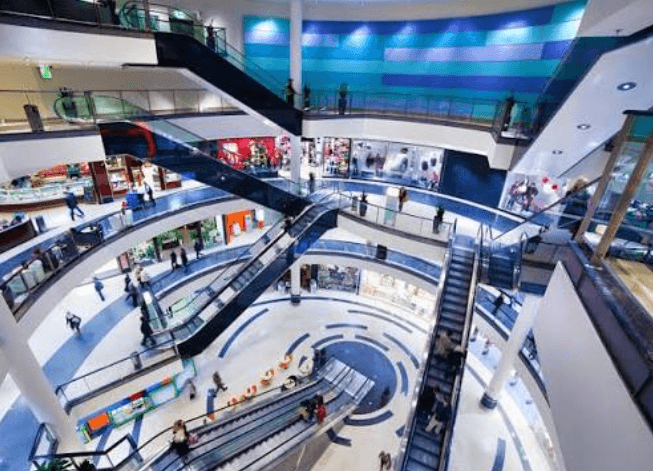
Mall advertising has evolved far beyond placing a poster beside an escalator or renting a large display near a food court. Today, it can be part of a carefully planned customer journey that turns physical visibility into digital engagement, consideration, and eventually brand loyalty. Effective mall advertising connects brands with consumers when they are already in a commercial environment, making the surrounding context an important part of the advertising experience.
For retailers, restaurants, financial services, telecommunications companies, automotive brands, and consumer products, this environment creates an opportunity that many digital channels cannot completely replicate. Shoppers can see a message, encounter the product, discuss it with companions, visit a store, scan a QR code, or search for the brand—all within the same customer journey.
The challenge is that foot traffic alone does not guarantee marketing success. A crowded mall can generate thousands of impressions without creating meaningful brand recall. The strongest campaigns use location, timing, creative design, and measurable calls to action to move people from simply noticing a brand to developing a preference for it.
Why Mall Advertising Can Influence Brand Loyalty
Mall environments combine high pedestrian traffic with relatively long dwell times. Unlike a roadside billboard that may be viewed for only a few seconds, mall audiences may spend an hour or more moving through different areas of the property.
That additional exposure creates opportunities for repetition. A shopper might first see a campaign near the entrance, encounter another message while walking toward a store, and later interact with a branded display near the food court. Repeated exposure can strengthen recognition, particularly when the creative execution remains consistent.
Context also matters. Advertising for a sportswear company placed near a fitness retailer has a different psychological effect from the same advertisement appearing in an unrelated environment. Brands can use mall locations strategically by placing messages where the surrounding businesses, shopper intent, and demographics align with their target audience.
The goal is not simply to generate impressions. It is to make those impressions useful.
A Practical Strategy for Turning Foot Traffic Into Loyalty
Successful mall campaigns typically connect physical exposure with measurable customer actions. A practical approach involves several stages.
1. Define the Audience Before Choosing the Location
Start with the customer rather than the advertising format.
Consider age range, income level, shopping behavior, lifestyle, purchasing intent, and likely reasons for visiting the mall. A premium fashion brand may benefit from positioning around luxury retail areas, while a family-oriented product could perform better near entertainment zones or supermarkets.
The same mall may contain several distinct audiences depending on the day and location. Weekend traffic can differ significantly from weekday traffic, while evening visitors may have different motivations from lunchtime shoppers.
2. Match the Message to the Shopper’s Mindset
A common mistake is using exactly the same creative across every advertising environment.
Mall advertising should account for what people are doing when they encounter the message. Someone approaching a retail store may be receptive to a product-focused offer. A shopper waiting for an elevator may have more time to absorb educational or brand-building content.
Keep the primary message easy to understand. Strong mall creative generally communicates one central idea instead of forcing people to process several competing claims.
For example, a restaurant might use a simple message encouraging shoppers to visit after a movie, while a technology company could promote an in-store demonstration located nearby.
3. Build Repetition Into the Customer Journey
One placement rarely creates strong brand memory on its own.
Instead, consider a sequence of touchpoints. The first advertisement can introduce the brand, a second can reinforce its key benefit, and a third can provide a clear action such as visiting a store or scanning a QR code.
This creates a basic progression:
Awareness → Recognition → Consideration → Action → Retention
Consistency is critical throughout the sequence. Logos, colors, typography, tone, and core messaging should work together so consumers recognize the same brand at every stage.
4. Connect Physical Advertising With Digital Behavior
One of the biggest advantages of modern mall campaigns is the ability to connect offline exposure with online actions.
QR codes, short URLs, promotional landing pages, mobile offers, loyalty-program registrations, and social media campaigns can provide measurable next steps.
Suppose a beauty retailer runs advertisements throughout a shopping center promoting a new skincare range. Instead of asking people simply to “learn more,” the campaign could offer a skin consultation booking page or product guide. The brand can then measure scans, appointments, registrations, and eventual purchases.
This turns an otherwise difficult-to-measure offline impression into a trackable customer interaction.
5. Measure More Than Impressions
Impressions and estimated foot traffic are useful, but they do not tell the entire story.
A stronger measurement framework can include:
- QR code scans
- Website visits during the campaign period
- Store traffic
- Coupon or promotional-code usage
- Loyalty-program registrations
- Social engagement
- Branded search activity
- Lead generation
- Sales or revenue attributed to the campaign
For example, if a campaign generates 500,000 estimated impressions but only a handful of meaningful interactions, the creative, placement, offer, or targeting may need improvement.
Conversely, a campaign with fewer impressions but substantially higher engagement could be more valuable.
Common Mall Advertising Mistakes
Choosing Locations Based Only on Traffic
The busiest location is not automatically the best location. A high-traffic area may expose an advertisement to thousands of people who have little relevance to the brand.
Audience quality, dwell time, visibility, viewing angle, proximity to relevant stores, and shopper behavior should all influence placement decisions.
Trying to Say Too Much
Mall audiences are usually moving. Overloaded advertisements containing multiple products, long paragraphs, several offers, and complicated instructions are difficult to process.
Use a clear hierarchy: brand first, primary message second, action third.
Ignoring the Physical Environment
Creative should account for lighting, viewing distance, surrounding signs, architecture, pedestrian direction, and competing advertisements.
A design that looks excellent on a computer screen may become ineffective when viewed from 20 feet away in a busy corridor.
Failing to Create a Follow-Up Experience
Getting someone to scan a QR code is only the beginning. If the landing page loads slowly, looks poor on mobile devices, or provides no clear next step, the advertising investment can lose much of its value.
The physical and digital experiences should feel like parts of the same campaign.
Expert Tips for Building Stronger Campaigns
Start by establishing one measurable objective. Brand awareness, store visits, lead generation, product trials, and loyalty registrations require different creative approaches.
Next, test different messages rather than assuming the first concept will perform best. Where possible, compare creative variations across locations or time periods.
Use location-specific messaging when it provides genuine value. “Two minutes from here” can be more actionable than a generic “Visit us today” message.
Also consider campaign timing. Retail advertising can become more effective when aligned with seasonal shopping periods, product launches, holidays, local events, or changes in consumer behavior.
Finally, connect campaign data with broader marketing analytics. If branded searches, website traffic, store visits, and sales increase after a mall campaign launches, examining those signals together provides a more realistic picture of impact than relying on a single metric.
For brands managing the digital side of the customer journey, technical website performance also deserves attention. A campaign can create valuable interest, but a poorly optimized destination page can prevent that interest from becoming a conversion. Tools such as AudEsto can help marketers identify SEO issues on a website or individual page and generate an audit report that can be reviewed before or during a campaign.
See also: Rafer Discount: How Verified Deals Are Helping Small Businesses Compete With Big Retailers
Conclusion
Mall advertising is most effective when brands stop treating it as a simple awareness channel and start viewing it as part of the customer journey. Foot traffic provides the audience, but strategic placement, relevant messaging, repetition, digital integration, and measurement determine what happens next.
The strongest campaigns do more than make people notice a logo. They create a sequence of experiences that helps consumers recognize a brand, understand its value, interact with it, and eventually choose it over competitors.
That is where the real transition from foot traffic to brand loyalty begins.