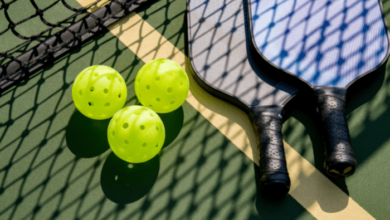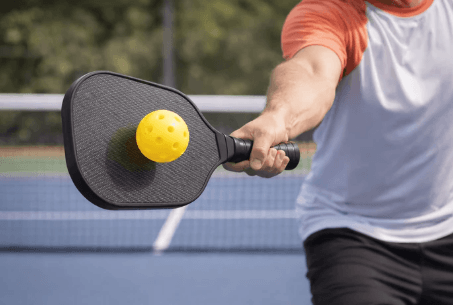
If you’ve ever picked up two pickleball paddles that looked nearly identical but felt completely different on contact, you’ve already experienced the impact of core materials. It’s one of those details that often gets overlooked at first. Most players focus on grip, shape, or surface texture, yet the core quietly does the heavy lifting. It influences how the ball reacts, how much effort you need to generate power, and even how your arm feels after a long match.
Understanding what’s inside your paddle can change the way you shop, and more importantly, the way you play. Once you get a sense of how different cores behave, it becomes easier to find something that fits your style instead of working against it.
What the Core Actually Does
At its simplest, the core is the interior structure sandwiched between the paddle’s outer faces. But calling it “just the middle” doesn’t do it justice. This layer controls how energy transfers from your swing into the ball. It also affects vibration, which plays a big role in comfort.
Think of the core as a filter. When the ball hits the paddle, the core determines how much of that impact is absorbed and how much is returned. A softer core will dampen the hit and offer more control, while a firmer one tends to spring the ball off the face with added pace.
That balance between absorption and rebound is what makes core materials so important.
Polymer Cores: The Everyday Standard
Polymer cores are by far the most common option you’ll find today. They’re usually made from a plastic blend arranged in a honeycomb pattern. If you’ve played with a modern paddle, chances are you’ve already used one.
What makes polymer appealing is its versatility. It softens impact enough to reduce noise and vibration, which is helpful during longer games or for players dealing with elbow discomfort. At the same time, it still provides enough pop to keep shots lively.
Players who prefer a balanced feel often gravitate toward polymer. It doesn’t push you too far toward power or control, which makes it a safe and reliable choice while you’re still refining your game.
Nomex Cores: Built for Power
Nomex cores have been around for a while, and they bring a noticeably different feel to the court. Made from a rigid, resin-coated material, they create a firmer hitting surface with a sharper response.
The first thing many players notice is the sound. There’s a distinct “pop” that comes with each strike, and it’s not just for show. That firmness translates into more power, especially on drives and put-away shots.
However, that added power comes with trade-offs. The reduced cushioning means less forgiveness on off-center hits, and the extra vibration can be tiring over time. Players who rely on aggressive playstyles often appreciate Nomex, but it may not suit someone focused on finesse and touch.
Aluminum Cores: Control and Touch
Aluminum cores sit on the opposite end of the spectrum. They tend to be lighter and softer, offering excellent control and a more muted feel.
These paddles are often favored by players who enjoy a slower, more strategic game. If you spend a lot of time at the net, placing dinks and resets, aluminum can give you that extra bit of precision. The ball feels like it lingers on the paddle just a fraction longer, which helps with placement.
That said, aluminum cores typically generate less power. Players who depend on strong baseline shots might find themselves working harder to keep the pace up.
See also: The Importance of Lifeguard Certification: A Guide to Sports Lifeguarding
How Core Thickness Changes the Feel
Material is only part of the story. Thickness plays a role that’s just as important, even within the same core type.
Thicker cores tend to absorb more impact, leading to a softer feel and better control. They’re often preferred by players who want consistency and reduced strain on the arm. On the other hand, thinner cores compress less, which can increase responsiveness and power.
It’s a subtle difference at first, but after a few games, it becomes noticeable. Some players even switch between thicknesses depending on whether they’re practicing or competing.
Matching Core Materials to Your Play Style
Choosing the right core comes down to how you approach the game. There’s no universal “best” option, only what works best for you. If you enjoy fast-paced rallies and strong finishes, a firmer core like Nomex might give you the edge. If control and patience define your game, aluminum could feel more natural. For those somewhere in between, polymer often strikes a comfortable balance.
This is where trying different paddles can make a real difference. Specs on paper only tell part of the story. The way a paddle responds in your hands is what ultimately matters, especially when searching for the best pickleball paddles for your skill level.