Planning a move involves a series of decisions, and one of the most critical is selecting the right size vehicle to transport your belongings. Whether you’re relocating from a studio apartment bursting with boxes or planning to haul every possession from a sprawling multi-bedroom house, the right moving truck ensures a smoother, more efficient experience overall. Many first-time movers underestimate the impact that choosing an appropriately sized vehicle can have—it affects everything from the length of your moving day to the safety of your belongings during transit. Working with a passenger van rental company in PA or another reputable provider can make all the difference when it comes to vehicle selection, flexibility, and safety. Rental professionals will often provide valuable advice, but knowing your needs in advance will help streamline the process and give you a better sense of control.
Choosing the correct truck size not only saves time and effort but also helps prevent damage to your possessions or unnecessary extra trips. If your load is tightly packed into a vehicle that’s too small, you risk damaging fragile items or having to double back for additional loads. Conversely, renting a truck that’s much too large means paying a premium for unused space and possibly struggling to maneuver a vehicle that is bigger than necessary. Understanding how much space you need—and being honest about what you plan to move—will put you on the path to a stress-free moving day.
Assess Your Inventory
Before browsing truck options, create a thorough list of everything you plan to move. Go room by room, noting furniture such as beds, sofas, dressers, desks, tables, and chairs. Don’t forget household appliances—such as refrigerators, washers, and dryers—as well as boxes, seasonal equipment, sports gear, and any awkward or oversized objects, like pianos, headboards, or large mirrors. Creating a detailed inventory will help you accurately determine your spatial requirements and avoid underestimating the amount of truck space you’ll need. If you have a lot of items that are oddly shaped or cannot be stacked efficiently, ensure you account for the extra space these will inevitably require. Numbering or labeling boxes according to rooms or categories can also speed up both your inventory process and your unpacking at the new location.
Understand Truck Size Categories
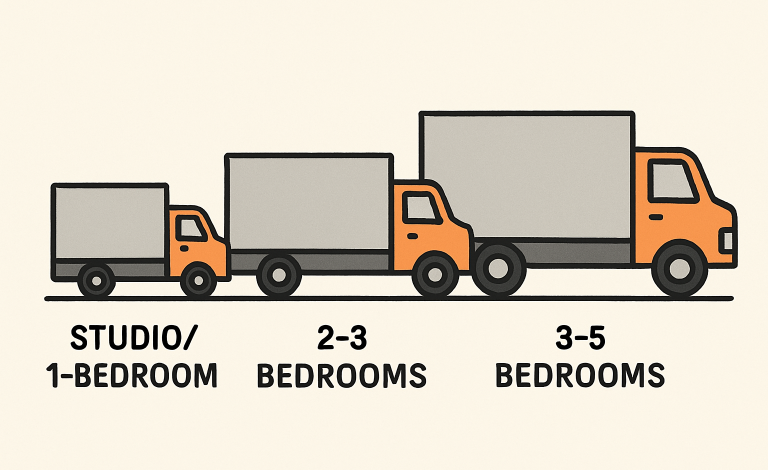
Moving vehicles are available in a variety of sizes, and most rental companies group them as small, medium, or large. Each size fits a specific range of moving needs and has a set volume capacity, measured in cubic feet, which helps you match your inventory to the right vehicle:
- Small Trucks (10-12 ft.): These are best suited for studio or one-bedroom apartments. Expect enough room for a bed, a few essentials (such as a small dresser or nightstand), and several stacks of moving boxes. Small trucks are easier to drive, park, and maneuver, making them ideal for those with limited experience with larger vehicles.
- Medium Trucks (15-17 ft.): This is the most popular size for moving trucks, ideal for the contents of two- to three-bedroom apartments or smaller homes. They provide sufficient space for larger pieces of furniture, such as couches and dining tables, as well as several boxes, lamps, and small appliances. Medium trucks are versatile, striking a balance between capacity and drivability.
- Large Trucks (20-26 ft.): These trucks are designed for large moves, such as those involving three- to five-bedroom homes or households with multiple bulky items, a full set of appliances, and numerous boxes. They provide ample space but may require more careful route planning due to their size and parking requirements.
Getting familiar with these categories prevents both overpaying for unnecessary space and struggling with a vehicle that’s too small for your belongings. You want every inch of your truck packed efficiently, but not so full that you’re forcing items into places they don’t belong.
See also: Reliable and Efficient Road Freight Services for All Businesses
Consider Special and Fragile Items
Pay extra attention to large, delicate, or valuable items. Bulky furniture, oversize mirrors, glass-top tables, or musical instruments like pianos require more space and may necessitate the use of professional moving equipment. Wrapping and protecting these pieces adds bulk, so be generous in your space estimates. If you have artwork, antiques, or electronics, allocating enough space for secure placement—not just stacking them in precarious positions or wedging them among heavy furniture—helps prevent costly damage. Accounting for these in advance makes it less likely you’ll encounter last-minute frustrations or need to spring for additional vehicles or specialty moving services. In some cases, these items might require consultation with specialty movers to ensure safe transit.
Evaluate Distance and Trip Frequency
The logistics of your move can influence your vehicle choice. If you’re moving locally, you may be able to use a smaller truck and take multiple trips with ease. For moves within the same city or neighborhood, it’s easier to make several passes, especially if you have flexible access to both the old and new locations. However, for long-distance moves, it’s typically much more efficient and economical to select a truck that can accommodate everything in one go, minimizing both time and fuel costs. Long trips mean extra mileage charges, higher gas consumption, and more time spent on the road—so a single large load could save you significant money and hassle. Evaluating the practicalities of your move—including route, timeframe, and weather conditions—can help you pinpoint the best vehicle size.
Use Online Calculators
If you’re uncertain about which size will fit, several online calculators are available to help estimate your needs. These tools take your detailed inventory and provide suggestions based on total volume or weight, which can be incredibly helpful if you’re not confident eyeballing cubic footage. A popular resource to try is the Home Depot’s Moving Calculator, which breaks down your inventory and matches you to the right vehicle size. Utilizing these online resources can help you avoid over- or underestimating your requirements, allowing for a more accurate and confident vehicle reservation.
Account for Parking and Accessibility
While determining truck size, it’s crucial to consider whether you’ll have enough space to maneuver, park, and load or unload the vehicle at both your current and new locations. Narrow streets or limited parking might limit your options for larger trucks, and it’s always better to anticipate these issues ahead of time rather than discover them on move-in day. Always check for homeowners association rules, street permits, or apartment complex regulations regarding commercial vehicle access before your move. Apartment complexes and urban neighborhoods can introduce unique loading challenges that influence what size truck you can feasibly use.
Consult with Moving Professionals
If you’re unsure about the right choice, reputable moving companies and rental providers can offer expert guidance. They’re often able to recommend a truck size after asking about your inventory, the distance of the move, and any access concerns you may have. Additionally, experienced movers can identify potential oversights and ensure that you don’t overlook critical factors, such as weight limits, fragile item placement, and state-specific requirements for larger vehicles. Relying on their experience helps you avoid costly or inconvenient errors. Professional advice is particularly valuable for individuals who have never moved before or those with complex household layouts and unique items.
Final Thoughts
Choosing the right size vehicle is one of the most crucial steps in planning a successful move, whether it’s big or small. Accurately estimating the amount of truck space you need, considering the types of items you’re moving, and planning for parking and access challenges will save you time, money, and stress. Take advantage of professional advice and online resources, and you’ll be fully prepared for moving day. With the right planning and a carefully selected vehicle, your move will not only be efficient but also safe and organized. Happy moving!