The shared mobility market in the USA is growing fast, and both new operators and large enterprises want to build reliable, scalable e-scooter fleets. But the pressure on these teams is higher than ever. Cities want safer rides. Riders expect smooth apps. Investors demand strong margins. And internal teams want simpler automation.
This is why operators now rely heavily on e scooter mobile app development services to create modern platforms that reduce manual work, support fleet health, and offer a clean rider experience from day one.
Across the country, city policies are opening more doors for e-scooter programs. According to the 2024 Shared Micromobility State of the Industry Report from NABSA, shared micromobility ridership in North America hit 225 million trips in 2024, up 31% from 2023. And the trend is expected to continue as cities promote low-emission transport. More riders mean higher expectations, and the app becomes the center of the entire experience.
The guide below covers everything startups and enterprises need before investing in e scooter app development services, including features, tech stack, development steps, and long-term support planning.
Understanding the E-Scooter App Revolution
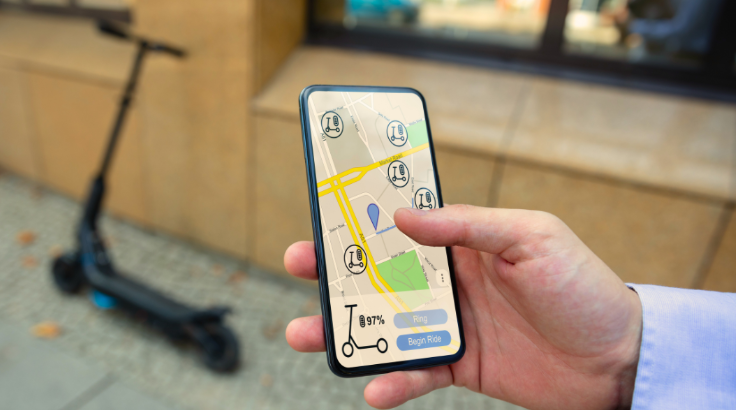
E-scooter apps are now the “control center” of every fleet operation. For riders, the app is the first and last point of contact. For operators, the app connects vehicles, payments, data, and staff. And for cities, it ensures compliance and safety.
Urban mobility and sustainability drivers
U.S. cities are trying to cut traffic and reduce carbon emissions. E-scooters support this shift with short-distance, low-cost, and cleaner travel. More people use scooters for last-mile trips, campus movement, and fast downtown commutes. Operators want apps that match this demand with real-time accuracy, smooth onboarding, and minimal friction for riders.
Why startups and enterprises are investing now
Startups see a chance to enter the market with smaller fleets and fast expansion. Enterprises want deeper control, multi-city support, and data intelligence. Both segments now prioritize professional development services because ready-made apps often fall short once scaling begins. They need flexible tech, strong uptime, and deep integrations built for complex U.S. city rules.
How apps unify fleet, payment, and user experience
A well-designed app removes friction for everyone. Riders unlock a scooter in seconds. Operators view battery levels, movement, and health in real time. Finance teams track earnings across states. City regulators view speed limits and parking compliance.
This creates a system where the entire fleet runs smoothly without heavy manual intervention.
Key Features of Modern E-Scooter Apps
A strong e-scooter app is designed around reliability, safety, and rider comfort. These features support the full trip cycle and reduce operator workload:
- Real-time tracking and geofencing: Riders see accurate scooter locations, and operators manage zones that include slow-speed, no-park, and no-ride areas.
- Secure payment and digital wallets: Support for cards, PayPal, Apple Pay, and stored credits ensures fast and safe checkouts.
- User-friendly design with support tools: Simple flows, easy reporting, and rating features create smoother interactions and fewer rider complaints.
- Multi-language and platform compatibility: Apps must perform well on iOS, Android, and browsers while supporting regional language needs.
These features help operators offer fast trips, reduce misuse, and maintain better fleet health.
See also: Braze + post-click personalization: technical integration checklist
The Next-Gen Technology Stack
Modern e-scooter systems use advanced software and hardware to process data, support uptime, and deliver instant updates. This tech foundation is one of the biggest reasons operators choose full app development services instead of generic templates.
IoT, AI, and cloud-powered solutions for app intelligence
IoT modules inside scooters send constant data to the cloud. AI tools study this data to identify patterns in ride usage, charging behavior, and maintenance needs. Cloud infrastructure supports large data flows and keeps the system responsive during peak hours.
Integrating GPS, Bluetooth, sensors, and remote controls
Hardware must sync smoothly with the app. GPS supports location accuracy. Bluetooth helps with fast unlocking. Multiple sensors detect tilt, crash risk, tampering, and battery performance. Remote commands allow operators to lock, slow, or disable a scooter instantly when needed.
Machine learning for demand predictions and route optimization
ML models help operators place scooters in high-traffic areas and avoid idle time. They study ride history, time of day, weather, and event schedules. Better prediction increases revenue and reduces trips wasted on rebalancing.
Business Models and Monetization Strategies
U.S. e-scooter operators run different business models depending on their target audience, fleet size, and city regulations. Modern apps support several systems:
- Pay-per-ride, subscription, and rental models: These match riders with different needs — casual rides, daily commuters, or long-term corporate users.
- Group rides, loyalty programs, and promo codes: These tools boost retention, increase trips per user, and build stronger brand engagement.
- Data-driven revenue expansion: Operators use trip data, battery cycles, and zone heatmaps to plan pricing changes and new partnerships.
A versatile app lets operators adjust strategy without rebuilding core systems.
Development Process: From Idea to Launch
A structured development approach keeps the app stable and reduces the risk of costly redesigns later.
- Requirement gathering and journey mapping: Teams document core business needs, rider behavior, and compliance rules in the target cities.
- UI/UX design and prototyping: Designers create simple flows that support fast unlocking, easy payments, and low drop-off rates.
- Architecture, coding, and scalability planning: Developers prepare a backend that supports multi-city use, integrations, and strong app performance.
- Testing, deployment, and real-world pilots: Final testing covers GPS accuracy, app load time, scooter unlock speed, and device compatibility.
This process ensures faster launches and smoother fleet expansion.
Essential Considerations for Startups vs. Enterprises
Startups and enterprise operators share the same goal, a stable e-scooter platform, but their app requirements are very different.
Fast MVP development and validation strategies for startups
Startups need short development cycles. MVP apps help them test rider interest, pricing, and city demand. This approach reduces cost and offers quick traction. Once usage grows, new features like loyalty rewards, partner payments, and in-depth analytics can be added.
Full customization, brand control, and system integrations for enterprises
Enterprises often operate in multiple cities or states. They need deeper options for branding, dashboards, and system connections. Integrations with ERPs, financial software, or warehouse tools require stable APIs and custom development. Enterprises also need detailed reporting for city rule compliance.
Compliance, security, and local regulations
U.S. cities have their own rules for speed, sidewalk riding, parking, and age limits. Apps must adapt fast to these changes. Security is another priority. Operators need encrypted data flows, secure payments, and strong authentication.
Post-Launch Support and Futureproofing
Launching the app is only step one. The real advantage of expert development comes through long-term support, upgrades, and performance improvements.
Continuous improvement through analytics
App and IoT data help operators improve pricing, fleet placement, and maintenance planning. This data also helps refine city partnership strategies and adjust fleet distribution before peak hours.
Regular updates, security improvements, and feature upgrades
Updates keep the platform fast and secure. Teams roll out better device support, improved dashboards, and cleaner ride flows. Regular patches also protect rider data and payment information.
Partnerships for hardware and third-party integrations
Operators often add new IoT devices, battery systems, or partner services. Strong integration support ensures smooth additions without downtime. This keeps the app ready for growth and future expansions across states.
Conclusion
E-scooter operations across the USA are expanding quickly. Riders expect clean design, fast unlocks, and safety features. Operators want automation, real-time data, and multi-city control. And enterprises need deep customization with strong backend systems.
That’s why e scooter app development services are now essential for building high-performance shared mobility platforms. With strong technology, clean design, and long-term support, operators can scale smoothly, meet city rules, and create a reliable experience for thousands of riders.