Choosing fabric is one of the most exciting parts of creating a clothing collection. It is also one of the easiest stages to get wrong.
A print may look beautiful in a photograph but feel completely different when held in hand. Colours can appear brighter on a screen, the fabric may be heavier than expected, or the pattern scale may not suit the garment you had in mind. These small differences can affect how the finished clothing looks, feels and moves.
This is why experienced designers, boutique owners and clothing manufacturers rarely make fabric decisions based on online images alone. They compare physical samples before placing a larger order. A well-organised fabric swatch book makes this process much easier by allowing you to review the material, texture, print and colour in person.
Here is how you can use fabric swatches to choose printed fabrics more confidently for your next clothing collection.
Start with the Garment You Want to Create
Before looking at prints, be clear about the type of clothing you are planning to make.
A fabric that works well for a flowing summer dress may not be suitable for a structured jacket. Similarly, a bold print that looks great on a skirt may feel too busy when used across a full-length garment.
Think about the final product first:
- Is it intended for casual, formal or festive wear?
- Will the garment be loose or fitted?
- Does it need to hold its shape?
- Will it be worn in warm or cool weather?
- Does it require lining?
- How often will it be washed?
Once you understand the garment’s purpose, it becomes much easier to shortlist the right printed materials.
For example, breathable and lightweight fabrics are often preferred for summer shirts, dresses and tops. Fabrics with more body may work better for trousers, jackets, skirts or coordinated sets.
Use a Fabric Swatch Book to Compare Materials
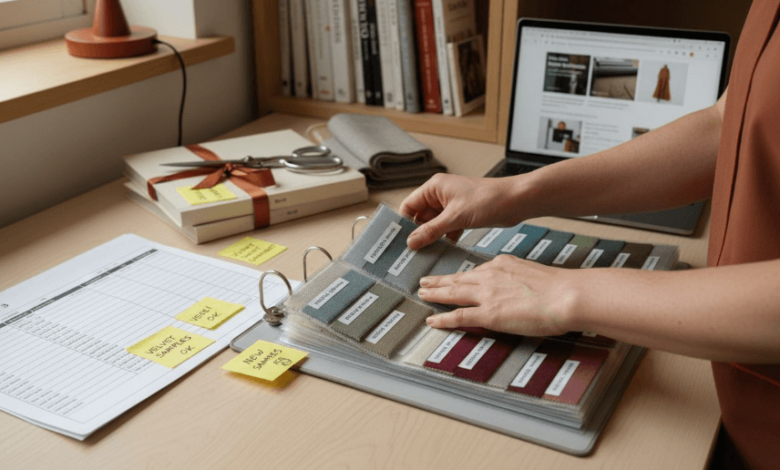
A fabric swatch book is more than a collection of small fabric pieces. It is a practical reference tool that helps you compare different materials without ordering large quantities.
When reviewing a fabric swatch book for textile business, pay attention to how each fabric feels in your hand. Bend it, fold it and hold it against the light. These simple checks can reveal a lot about its thickness, softness, transparency and drape.
Physical swatches also make it easier to compare similar fabrics side by side. Two materials may look almost identical online but behave very differently when stitched.
One may fall softly around the body, while the other may create a more structured silhouette. Seeing and touching the samples allows you to choose based on the actual garment requirement rather than appearance alone.
Check the Fabric’s Drape
Drape refers to the way a fabric falls or hangs.
Soft, fluid fabrics usually work well for garments such as dresses, scarves, kaftans and relaxed tops. Stiffer fabrics are often better suited for garments that need shape, including jackets, structured skirts and certain styles of trousers.
To check the drape, hold the swatch from one corner and let it fall naturally. You can also place it over your hand or arm to see how it forms folds.
The printed design should be considered along with the drape. A delicate floral print may appear soft and graceful on a fluid fabric, while a geometric print may look sharper and more defined on a fabric with greater structure.
Look Closely at the Print Scale
Print scale is the size of the motifs or patterns on the fabric.
Large prints can create a bold and dramatic appearance, but they may not work equally well on every garment. When cut into smaller pattern pieces, parts of the design may disappear or become uneven.
Small prints are generally easier to place and repeat across garments such as shirts, tops, children’s clothing and everyday dresses. Medium-sized motifs often provide more flexibility because they are visible without overwhelming the garment.
A swatch allows you to judge the real size of the print. However, keep in mind that a small sample may show only part of a larger design. Ask for a wider reference image or repeat measurement when working with oversized or directional prints.
Examine the Colours in Natural Light
Fabric colours can change under different lighting conditions.
A shade that appears warm indoors may look cooler in daylight. Some colours may also appear slightly different depending on the base fabric and printing method.
Review your swatches near a window or under natural light whenever possible. If you are developing a collection with multiple garments, place all the shortlisted samples together to check whether the colours work as a group.
This is especially useful when creating coordinated collections. The fabrics do not need to match exactly, but they should feel visually connected.
You should also consider how the chosen colours relate to the season, target audience and purpose of the garment. Soft shades may suit relaxed summer collections, while deeper colours can work well for festive or winter clothing.
See also: How Digital Transformation Is Reshaping Modern Businesses
Check the Fabric Composition
The fibre content influences the fabric’s comfort, durability, care requirements and overall appearance.
Natural fibres may offer breathability and softness, while blends can provide additional strength, stretch or wrinkle resistance. Neither option is automatically better. The right choice depends on the garment and customer expectations.
When comparing samples, check whether the fabric composition is clearly mentioned. You should also understand how the material reacts to washing, ironing and regular wear.
A beautiful print will not compensate for a fabric that is uncomfortable or difficult to maintain. The material should support both the visual design and the practical use of the garment.
Test the Fabric for Transparency
Transparency is particularly important when choosing lighter-coloured or lightweight printed fabrics.
Hold the swatch against natural light or place it over your hand. This will help you determine whether the finished garment may require a lining.
Slight transparency may be acceptable for scarves, overlays or layered styles. However, it can become a concern for dresses, trousers or everyday tops.
Knowing this before production allows you to include lining costs in your budget and avoid unexpected changes later.
Consider How the Print Will Be Placed
Some printed designs can be cut in any direction, while others need careful placement.
Stripes, borders, checks and one-way motifs usually require more planning. If the print has a clear top and bottom, every garment piece must be cut in the same direction. This can increase fabric consumption.
Border prints are often used for sleeves, hems, necklines or statement panels, but the garment pattern must be planned around the border position.
When selecting printed fabric for clothing, visualise how the motifs will appear after cutting and stitching. A print should not only look good as a full fabric length; it should also work on the individual sections of the garment.
Perform Basic Quality Checks
Before committing to a bulk order, use the swatch to perform a few simple checks.
Gently rub the surface to see whether the colour transfers. Stretch the fabric slightly to observe whether the print cracks or distorts. Check the edges for excessive fraying and look closely for uneven printing.
You can also wash the sample according to the recommended care instructions. This helps you observe shrinkage, colour bleeding and changes in texture.
Testing a small swatch cannot predict every production issue, but it can help you identify obvious concerns before investing in a larger quantity.
Compare Several Options Before Deciding
It can be tempting to choose the first print that catches your attention. However, comparing a few suitable options often leads to a better decision.
Place your shortlisted swatches together and assess them based on:
- Fabric feel
- Print clarity
- Colour suitability
- Drape
- Garment use
- Care requirements
- Expected cost
- Availability for bulk ordering
Do not choose only based on which fabric looks the most attractive. The strongest option is usually the one that balances appearance, comfort, function and production practicality.
Order a Small Trial Quantity
Even after reviewing a swatch, ordering a small trial quantity is a sensible step before bulk production.
A larger piece allows you to create a sample garment and see how the fabric behaves during cutting, stitching, pressing and finishing. It also helps you understand how the print looks across the full garment.
The sample stage may reveal that the print needs different placement, the fabric requires lining, or the garment pattern needs minor adjustments.
Making these changes before bulk production is far easier and less expensive than correcting an entire order later.
Conclusion
Choosing printed fabric becomes much simpler when you can see and feel the material before making a final decision. A fabric swatch book helps you compare print scale, colours, texture, drape, transparency and composition without relying entirely on screen images.
The goal is not simply to choose the most attractive pattern. The fabric should also suit the garment design, feel comfortable to wear and perform well during production and regular use.
Weaving Vibes offers swatches and printed fabric options that can help designers, clothing labels and textile businesses make more informed sourcing decisions. Review the available samples, shortlist the prints that suit your collection and begin with a trial order before moving into bulk production.